The White House has undergone significant structural changes since World War II, driven by structural necessities, functional needs, and presidential priorities. These updates, often controversial at the time, have been funded primarily through congressional appropriations, with some later projects relying on private donations. Below is a chronological overview of key modern renovations and additions by presidents since 1945.
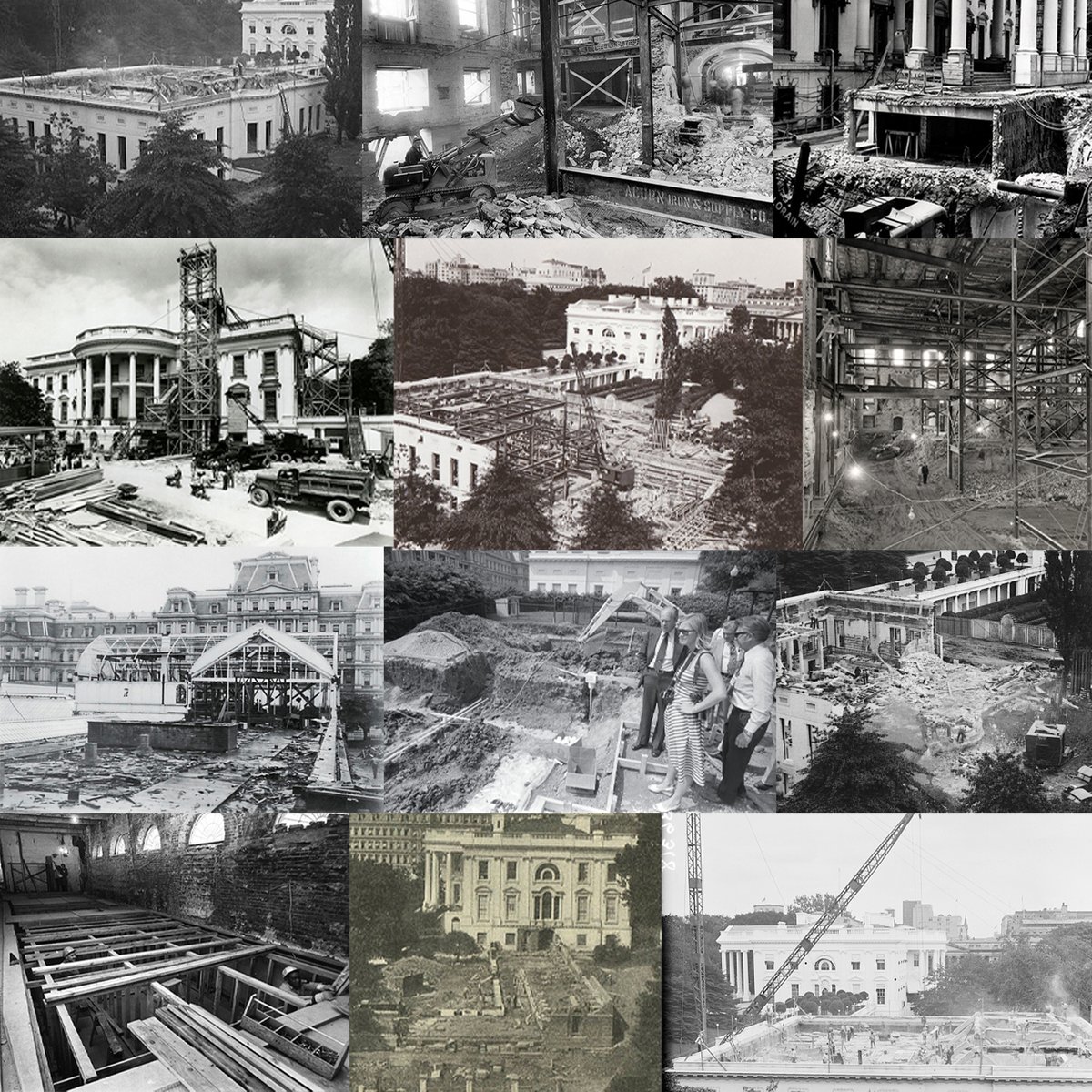
- Harry S. Truman (1945–1953): Upon taking office in 1945, Truman found the 150-year-old structure plagued by sagging floors, faulty wiring, and inadequate foundations from prior additions like the 1927 third floor. Initial repairs in 1946 were authorized by Congress at $780,000. In 1948–1952, a full interior gutting and reconstruction ensued, preserving the iconic exterior sandstone walls while installing a steel frame, new plumbing, electrical systems, and the Truman Balcony on the South Portico for private family use. Congress provided $5.4 million total for the project, amid Republican criticism over costs and scope.
BUILD THE BALLROOM
— PhilipTerzian (@PhilipTerzian) October 22, 2025
Just a reminder, for the benefit of left-wing Twitter, that Harry Truman gutted/rebuilt the #WhiteHouse during 1949-52 at taxpayer expense (see below). Apart from furnishings, everything you see inside today is a modern reproduction. And so much for history! pic.twitter.com/2XxNl5chsl
- Dwight D. Eisenhower (1953–1961): Eisenhower oversaw the relocation of the presidential press corps from the West Wing basement to a new facility in 1966 (post-presidency but tied to his era’s planning), but no major structural additions occurred. He installed a putting green on the South Lawn and moved the Truman-era bowling alley to the basement beneath the Old Executive Office Building. Interior updates focused on security and office efficiency, funded through standard congressional maintenance budgets.
- John F. Kennedy (1961–1963): Kennedy emphasized aesthetic and functional interiors, commissioning French designer Stéphane Boudin for redecorations in the Diplomatic Reception Room and family quarters, restoring them to reflect historical periods like James Monroe’s. He also constructed the modern Rose Garden in 1962. These were non-structural but enhanced public spaces; funding came from congressional allocations and private gifts for furnishings.
- Lyndon B. Johnson (1963–1969): Johnson expanded West Wing offices to accommodate a growing staff, including a new Cabinet Room. He made frequent use of the existing heated indoor swimming pool in the West Wing basement (installed under FDR) but did not add a new one. Both were funded by Congress as part of operational expansions.
- Richard Nixon (1969–1974): Nixon relocated the press briefing room to the West Wing’s former indoor pool area in 1969–1970, creating a dedicated media space. He also installed a one-lane bowling alley in the basement in 1973 for staff use. These changes were financed through congressional appropriations.
- Gerald R. Ford (1974–1977): Ford added an outdoor swimming pool on the South Lawn in 1975 to replace the indoor one, promoting family recreation. It was funded entirely through private donations from the National Park Service’s foundation.
- Jimmy Carter (1977–1981): Carter focused on energy-efficient updates, such as installing 32 solar panels on the West Wing roof in 1979 for hot water heating, later removed under Reagan. No major structural work; funded via congressional energy initiatives.
- Ronald Reagan (1981–1989): The Reagans undertook extensive interior redecorations in 1981–1982, restoring 18th- and 19th-century aesthetics in state rooms with new wallpaper and furniture. A second-floor family kitchen was modernized. Funding blended congressional maintenance funds with private contributions from the Committee for the Preservation of the White House.
- George H.W. Bush (1989–1993): Minor security enhancements post-Cold War, including reinforced windows and an expansion of the tennis court on the South Lawn. Funded through federal budgets.
- Bill Clinton (1993–2001): Clinton permanently closed Pennsylvania Avenue in front of the White House to traffic in 1995 for security reasons after the Oklahoma City bombing. Interior tech upgrades like computers and refurbishments to the family quarters and Blue Room were added. Funded by Congress, with some private donations for furnishings.
- George W. Bush (2001–2009): Post-9/11, Bush enhanced perimeter security with bollards and gates. He also renovated the Yellow Oval Room and reinstalled solar panels on maintenance buildings. These were covered by congressional security allocations.
- Barack Obama (2009–2017): Obama installed a vegetable garden on the South Lawn in 2009 for public education and resurfaced the nearby tennis court for basketball use. A major West Wing infrastructure overhaul in 2010–2012 addressed plumbing and electrical issues, including a deep excavation for the Situation Room retrofit. All funded through congressional appropriations.
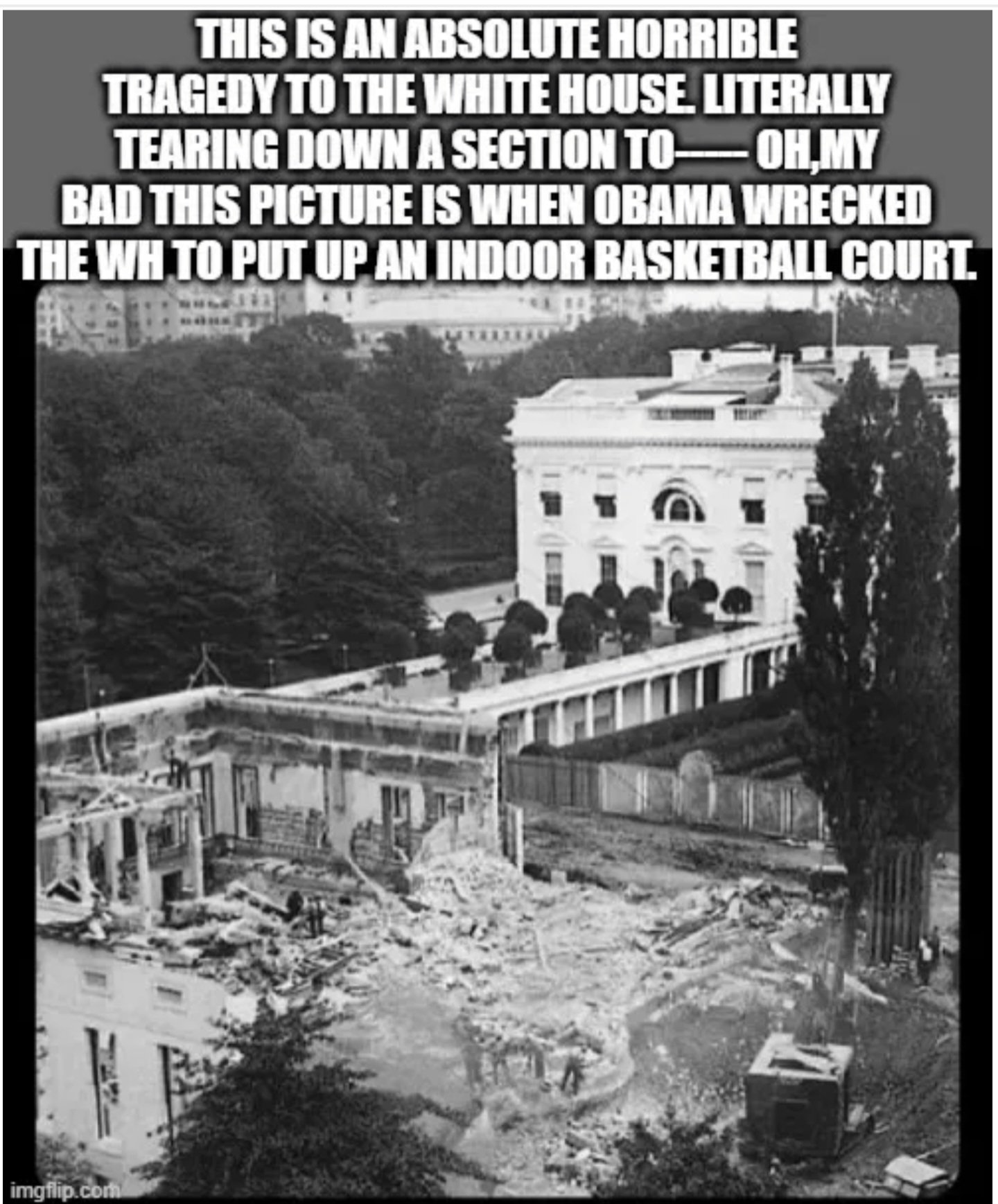
A CNN report from 2010:
— Christian Collins (@CollinsforTX) October 22, 2025
$376 million White House renovation during the Obama Administration.
Where was the Democrat outrage then? pic.twitter.com/MvLVDFcTru
- Donald J. Trump (2017–2021, first term): Trump redecorated the Oval Office in March 2017 with gold-hinted curtains, a Reagan-era rug, and historic busts like Winston Churchill’s. In 2020, a new tennis pavilion was built on the South Lawn, refurbishing the tennis court and adjacent garden. These were funded through congressional appropriations and private donations.
- Joseph R. Biden 2021-2025:
"Trump is defiling the sacred grounds of the White House" pic.twitter.com/vqz8YTRJe7
— End Wokeness (@EndWokeness) October 21, 2025
- Donald J. Trump (2025–, second term): In early 2025, Trump renovated the Lincoln Bedroom bathroom in the private quarters and added marble flooring to a South Lawn passageway. He created the “Presidential Walk of Fame” along the West Colonnade with gold-framed portraits of all presidents and transformed part of the Rose Garden into a paved “Rose Garden Club” for events.
Remember, the left is freaking out over this. Beauty is something foreign to them. pic.twitter.com/aNtZzslm3o
— unseen1 (@unseen1_unseen) October 22, 2025
- The centerpiece is a planned 90,000-square-foot State Ballroom off the East Wing, announced in July 2025, featuring ornate Gilded Age styling with coffered ceilings, Corinthian columns, chandeliers, gold leaf accents, arched windows, and a double-height portico; it will seat up to 650 guests for large diplomatic functions, replacing temporary tents. Construction, led by Clark Construction and McCrery Architects, began with East Wing demolition in September 2025 at an estimated cost of $200–$300 million, funded entirely through private donations from wealthy individuals and companies.
They just hate anything he does.